Is Racing, Motorcycle Road Racing Even FUN?
Is racing fun?
“Did you have fun?” is the #1 question club racers hear at the track after a race and when they get home from a weekend of racing. I don’t know how to answer that question, but my answer always defaults to “Yes!” even though I’m not sure what I mean when I say it.
After all, if it’s not fun, then why do it? We wouldn’t race if it wasn’t fun, right?
The first type is simple, uncomplicated, and safe. There’s either very little or no risk involved. There’s no suffering. Adventurers describe the first type of fun as enjoyable the entire time it’s happening and pleasant to remember later. Think of something like hanging out with a good friend and talking about all the things you have in common. Watching a certain kind of movie or reading a certain kind of book qualifies as this type of fun. The Barbie movie is fun. Toy Story is fun.
There are movies and books that are decidedly NOT fun to watch or read, yet people still like them. They’re work. People get something out of these movies and books that’s not simple, uncomplicated, safe fun the way people typically think of having fun. Yet we might describe the experience as fun after the fact. It’s often fun to talk about what we think of these types of movies and books after we watch or read them. I think most movies made by people like Stanley Kubrik, Terrence Malick, and Sofia Coppola qualify as this type of “fun“.
The second type of fun is miserable, painful, or exhausting while it is happening but deeply rewarding and fun to remember later. This type of fun is closer to what makes motorcycle racing a fun thing to do, but it still misses the mark in my opinion.
One of my most memorable racing experiences was at a CORCS hare scrambles event outside of Penrose, CO. Half the course was composed of the deepest, most powdery silt I’d ever seen. The other half was steep both ways, rocky, and wound through the trees. I wanted to quit halfway into my first lap. I dropped my bike in the silt every time I rode through it. I had to take a 15 minute break back at my van after every lap. I told myself I was either going to complete all of the laps, or I was going to die trying. I didn’t care where I placed. My only goal was to finish. At the end of my last lap, I was so exhausted I stepped off of my bike and let it crash into the ground.
I met world renowned, legendary enduro racer Fred Hoess that day. I had no idea who he was at the time, which I thought was hilarious when I found out. I asked him if he finished the race. He said he did without adding any details. He finished 2nd overall, if memory serves, on a Husky from the mid-80s against all of the club’s “pro” class riders riding shit-hot, late model bikes. I figured out who he was only after the race results were published online later that week.
The second type of fun is the kind that was so miserable it makes you want to talk about it, to brag about the fact you survived it. My experience at that hare scramble was that kind of fun. It wasn’t fun at all while I was doing it. I was proud of myself for finishing the race in one piece without dying.
Motorcycle road racing is different. It’s not nearly as physically taxing. It’s less about fitness and more about precise timing and finesse, although fitness helps. Turning laps on a road racing bike is very repetitive. The course barely, if ever, changes throughout an entire day of practice or racing. I know I can’t go quite as fast on a shaded, cooler section of the track when the clouds roll through, but I’m not dealing with shape-shifting ruts in the dirt like I would have to deal with during an off-road race.
It’s honest to goodness, dead-simple fun to snap the throttle open coming out of turn 8 at High Plains Raceway and feel my 600cc supersport bike do a “baby wheelie” into turn 9a. It’s fun while I’m doing it, but in the back of my mind I know what can happen if I get it wrong. It’s all of the fun of a video game but in real life, with real life consequences. There’s no free do-overs at the press of a button. There are no second chances; there’s this moment and the next moment. If I crash, it’s game over. I might be able to replace a foot peg, a handle bar, and a lever, but any damage beyond that means game over and hopefully fix the bike at home, try again next round.
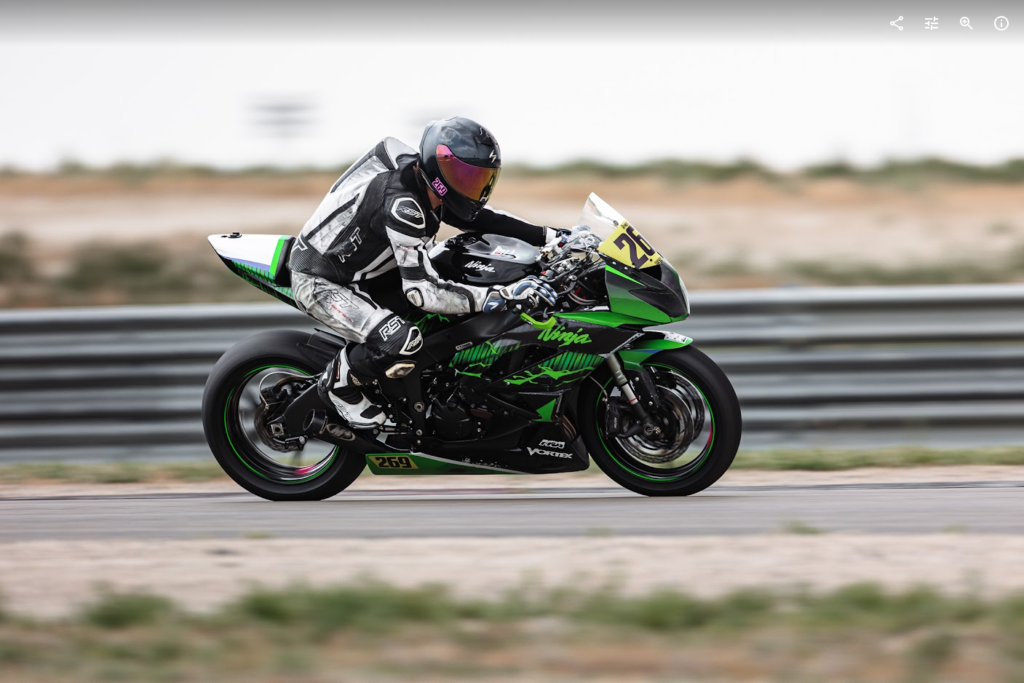
The speeds are so much higher than on a dirt bike. The forces involved are much, much greater. The potential for catastrophic, life changing injury is very real. When 400 pound, 130 horsepower motorcycles hit the ground and tumble at triple digit speeds, unlike a dirt bike that’s practically designed to crash, they tend to destroy themselves. Even if I walk away from a crash unharmed, there’s a good chance the better part of a motorcycle I worked my ass off to acquire and maintain is going to end up in the dumpster. The stakes are as high as they can get.
This is all part of the so-called fun. The massive risk involved is a huge part of what makes racing so much fun.
The third type of fun adventurers describe is not fun at all while it’s happening and miserable to remember. It’s fun because you lived through it. The third type of fun with respect to racing fast motorcycles amounts to getting pumped full of fentanyl in an ambulance and rushed to the emergency room and surgery followed by weeks, months, even years of recovery. Some racers never fully recover from especially gnarly crashes. Every year, a handful of club racers die during practice and competition. Motorcycle road racing is the first and second types of fun rolled into the same experience with a higher than average chance of turning into pure misery depending on how the day goes.
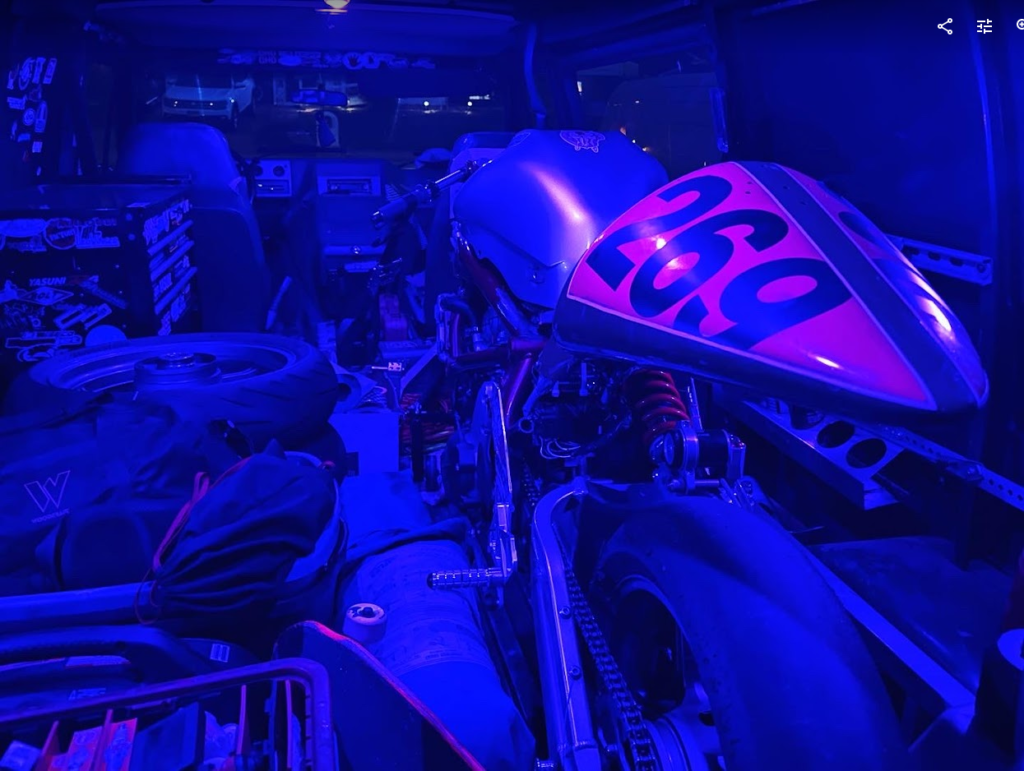
Racing is a fully immersive experience. There’s no time or room for anything else on race day.
It’s so much work to show up at a road racing event, to go through all of the motions to prepare the bike and gear, to load up, to make the drive and then to commit to everything necessary to make race day happen. There’s a canopy and a generator and power cords to set up, tire warmers to deal with, tire pressures and fuel levels to monitor and adjust, dozens of parts, tools, and pieces of gear that need precise timing, monitoring, adjustment, placement, and looking after throughout the day. I wouldn’t describe any of this as fun. It’s pure work. For every hour I spend riding the bike, I probably spend 3-5 hours preparing all of the necessary things to be able to ride the bike. Nothing about any of that is fun. The fun, if you even want to call it that, comes from the experience itself. The “fun” comes from knowing I know all of the things that need to be done and how to do them. The fun comes from a sense of mastery of and control over the equipment and thus the experience I have.
I get an immense amount of satisfaction from doing all of the necessary things that carry me through a race weekend. I love making it to the end of the weekend without my bike breaking, without crashing. I love the sense of sheer terror I feel when I get something wrong riding the bike and scare the fuck out of myself. I love pushing it a little harder and going a little faster every weekend I show up and race. I’m proud of all of it, the entire experience.
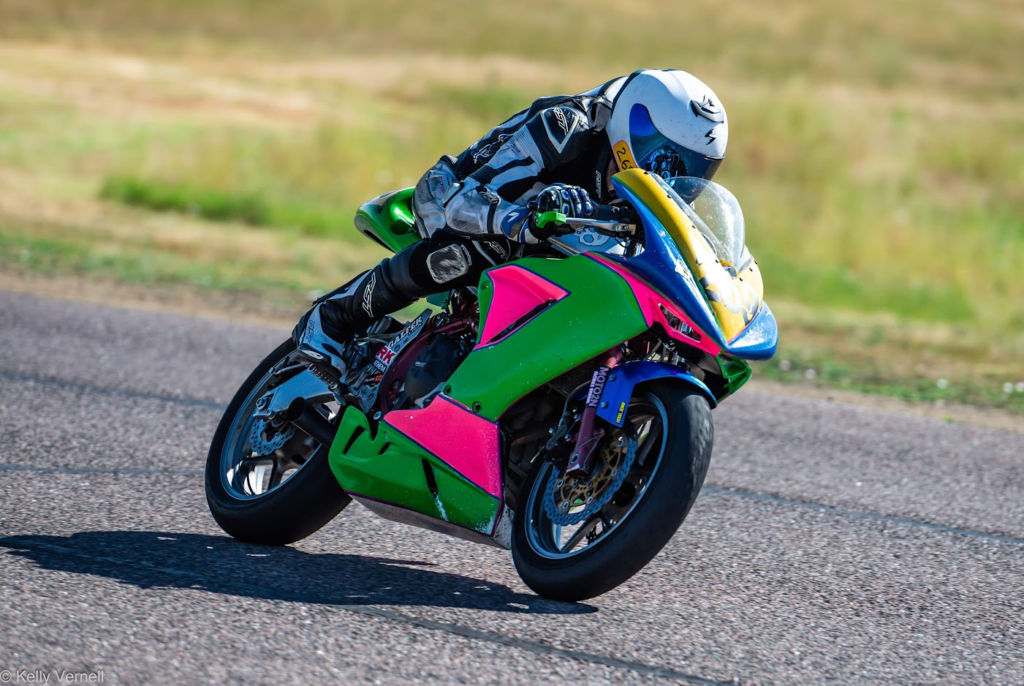
I may disappoint myself and fall short of my ideal lap time goals, but I’ve almost always found more speed and gone faster every weekend I’ve shown up and raced my bike. Even when I fall short of the ultimate goal, to run laps comparable to or near the fastest racers in the club, there are a bunch of back up goals to carry me through: to ride well, to not run into anyone, to avoid crashing, to not blow races due to avoidable mechanical issues, to make good decisions while riding and racing my bike, to finish Top-5 or Top-10 depending on how big the grids are that weekend. It’s a good weekend if I do all of that regardless of the numbers on the time sheets.
I get wound up in the days leading up to race day. Nervous. Jittery. Apprehensive. Doubting. Fearful. I can almost feel my blood pressure rising as I prepare. These feelings last all the way up until the 3rd call for my first practice session on Sunday when I pull my warmers, drop my bike off of its stands, throw my leg over it, and close my visor. Then I feel nothing. I’m blank. My mind is empty. I’m an endless ball of light. I’m finally operating on a purely emotional, body type level. No more thoughts. No more sentences. No more words. I’m 100% committed to and focused on what I’m about to do. That’s the feeling that makes racing so special and so worth it. I can’t get that feeling anywhere else, not safely or legally anyway.
Is it fun though? Yes. Racing is fun. It’s all types of fun; it’s complicated fun with a lot of work attached to it, and it’s easily the most worthwhile hobby I’ve ever pursued. I hope this explains it.