My 2006 Ninja 650 Project: From Street Bike to Race Bike and Back
I’ve written about this bike, my ‘06 Kawasaki Ninja 650, a lot over the years. To recap: I bought it as a theft recovery with an out-of-state title from my friend’s neighbor all the way back in 2020 without knowing if it would run or not. It was missing a lot of parts like the tank, fuel pump, bodywork, seat, and muffler.
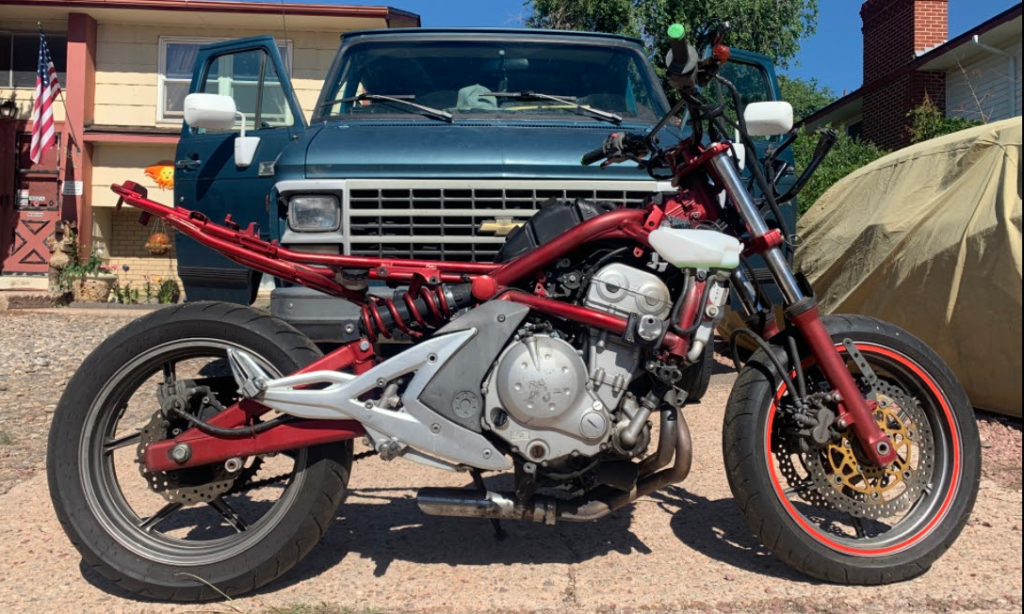
I hooked a battery up to the starter, spun the engine over to make sure it turned, and handed over $200 for the bike. I saw a bike with a steel frame that I could modify to my heart’s content.
I wouldn’t hear it run until 2022 after sourcing a (dented) fuel tank, a fuel pump assembly, and re-doing a lot of its wiring. It fired up and ran well. I sourced a stock muffler and a ZX10 race tail and subframe for it on eBay. I got some help from a friend with a MIG welder to fit the tail and subframe. I fit a round LED “headlamp” into a dirtbike style number plate and zip-tied it to the front fork. I attached a tiny tail/brake light to the tail using Velcro. After wiring up the lights, I added it to my insurance and put a plate on it.
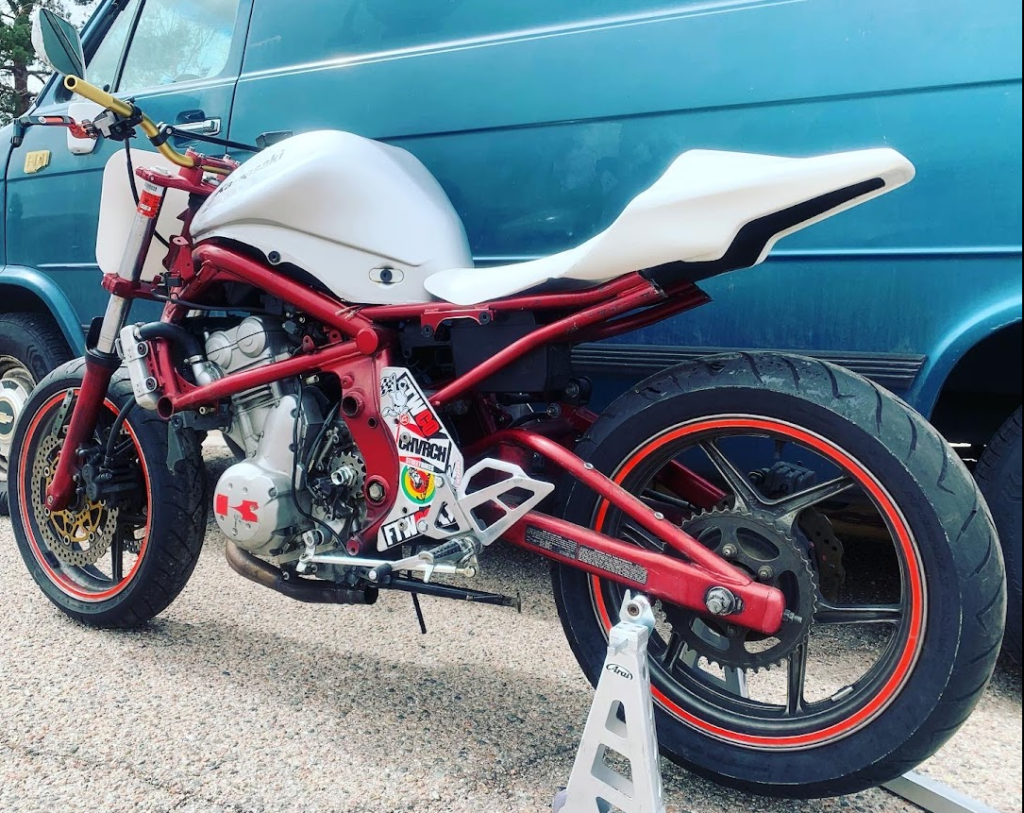
My first goal was to turn it into a street bike that I could also use at track days. In its first iteration, the bike had dirtbike-style handlebars, a ZX10 tail, and lights on it.
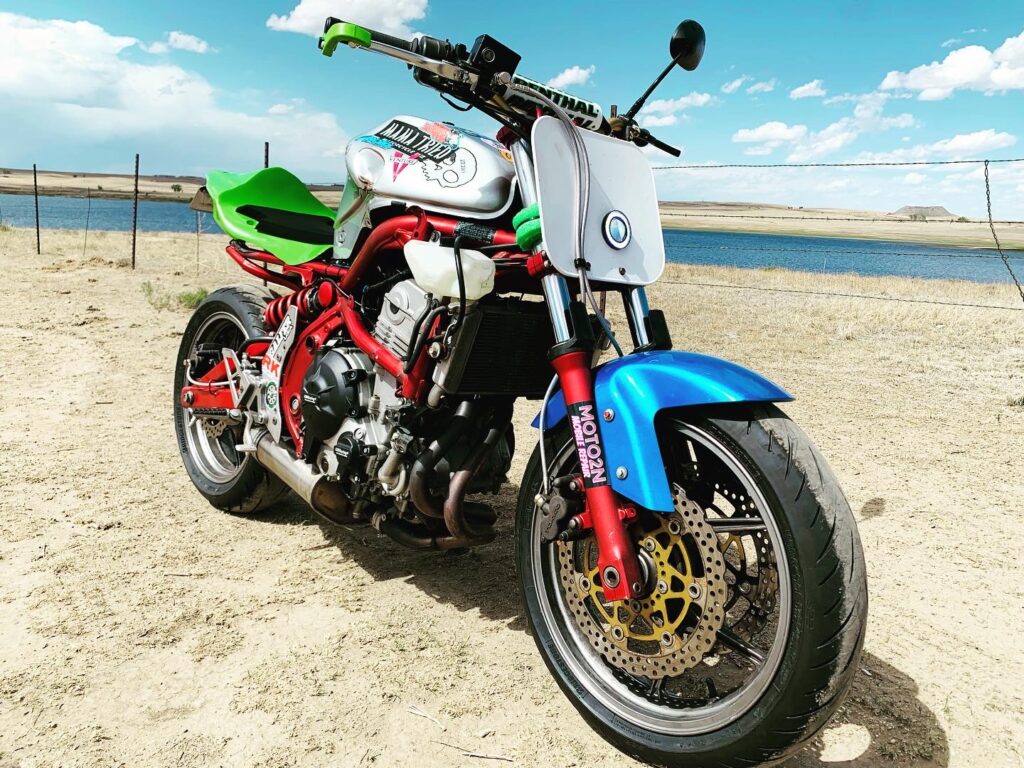
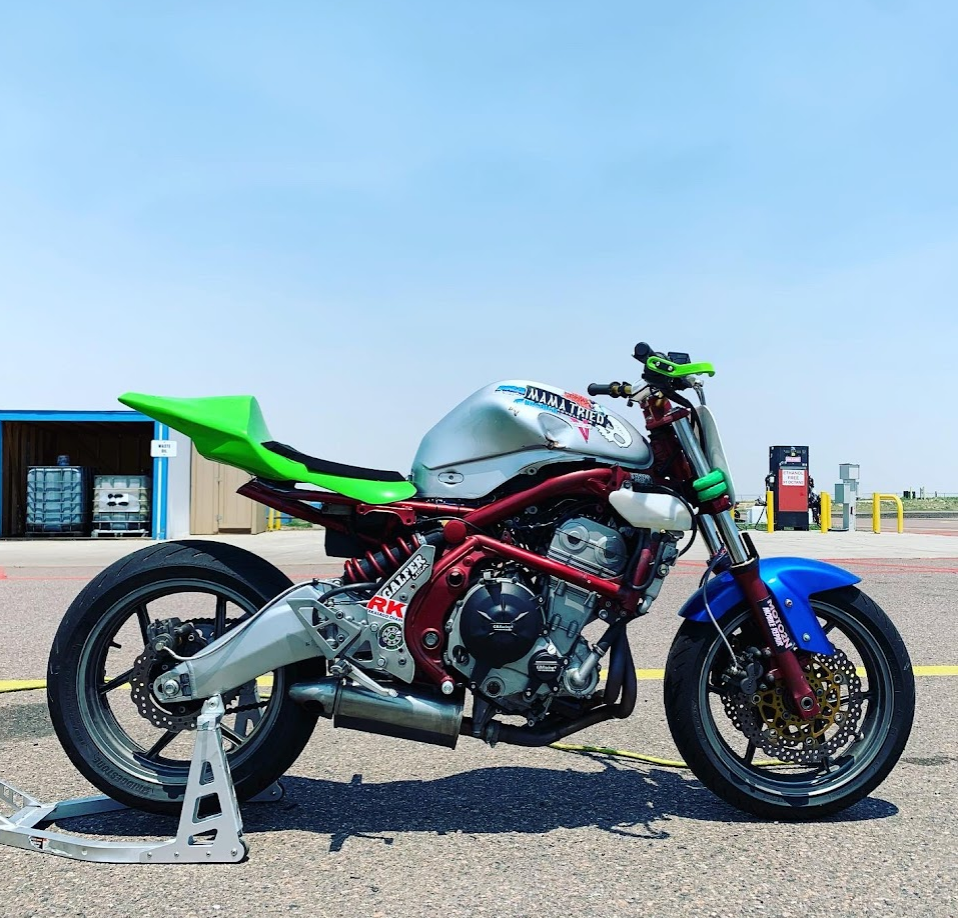
The race bug bit hard after a few track days, so I turned up at PPIR for the MRA’s superstreet class at Round 2 in 2022. I finished 2nd in a crowded field behind someone on a race-ready Yamaha R1 and in front of a bunch of riders on middleweight bikes. Then superstreet again at Round 3, followed by the MRA’s mid-season race school at HPR. I crashed the bike at the race school but still got my certificate because I wasn’t a complete dumbass about it.
The ZX10 tail got ruined in the crash. I had just bought and started learning how to use a TIG welding machine to weld aluminum. I still had a tail from the Honda RS125 I raced way back in the day.
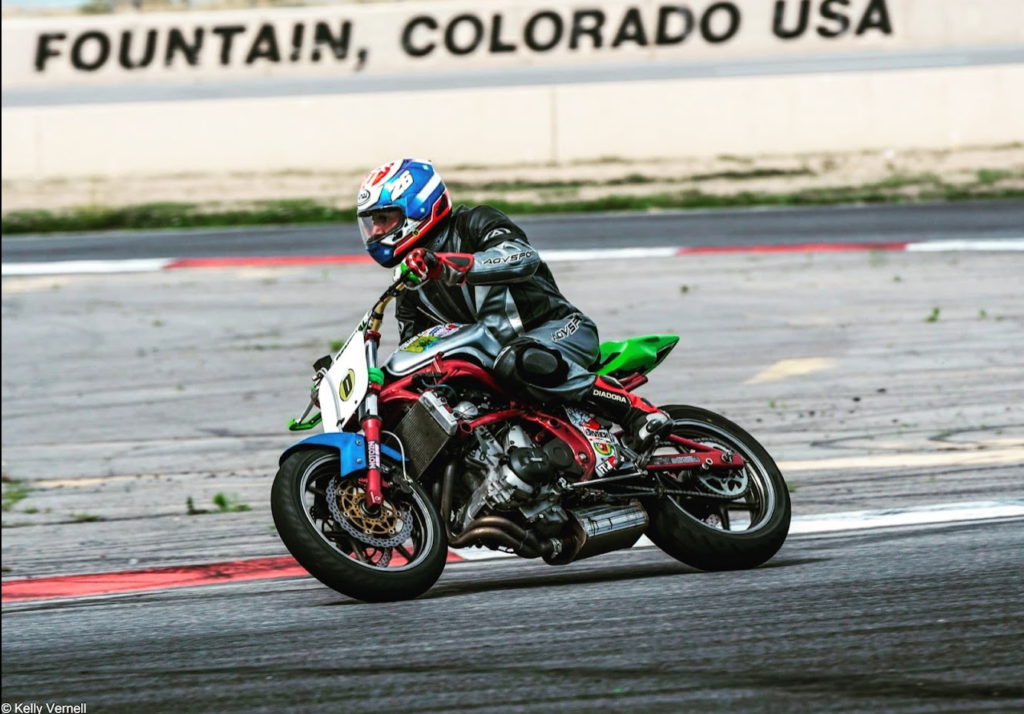
I ordered aluminum tubing from Aircraft Spruce. I cut the rest of the stock subframe tubes off of the 650’s frame. I welded 4x tabs to the main frame and fabricated a subframe out of aluminum to suit the RS125 tail I already had. I fabricated the first of two fluid-retaining belly-pans and safety wired the bike to go racing as a novice with the MRA during the last three rounds of the 2022 season. I ended the ‘22 season without crashing again and finished 5th in the points in the Lightweight 2x class, the only class I raced during my first season.
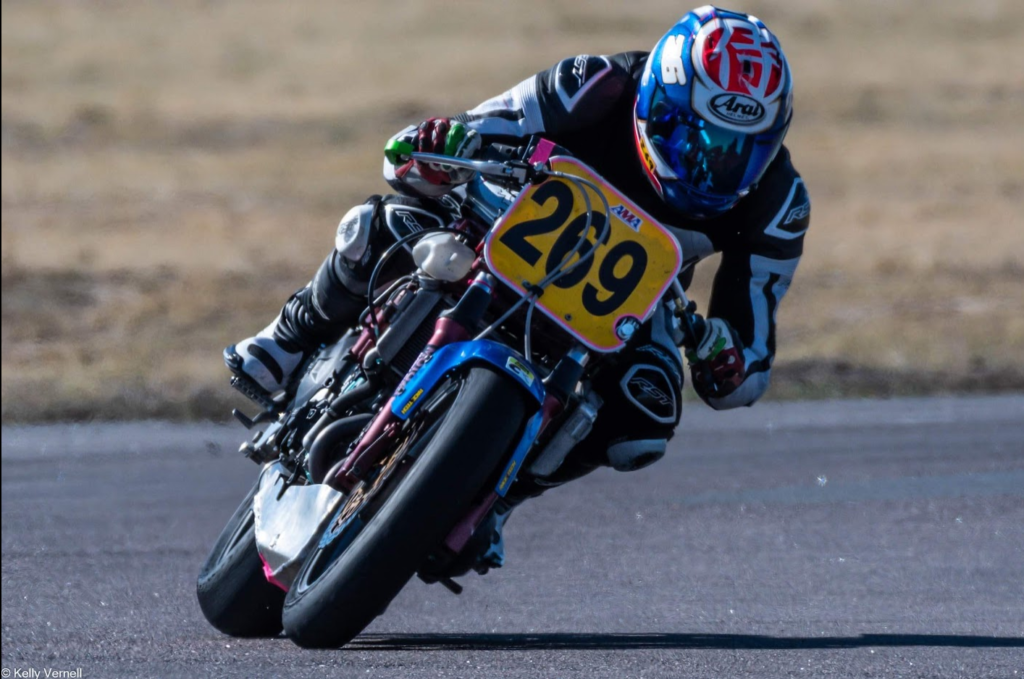
After that first season ended, I decided to campaign the bike for the entirety of the MRA’s 2023 season. I would show up to every round and race the Lightweight GP and 2x classes.
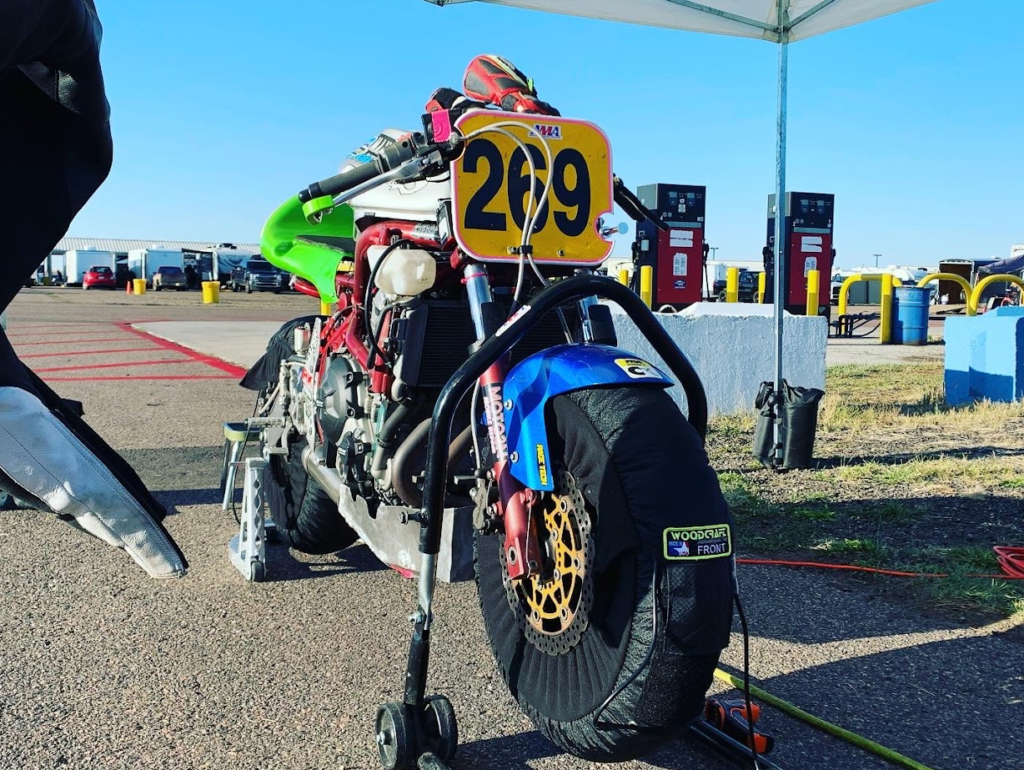
The front of the bike was way oversprung, and the rear was way undersprung. I installed Race Tech cartridge emulators with 1.00kg springs in the stock fork. I would eventually buy a set of 0.90kg springs, so I could mix them to get a 0.95kg spring rate. I installed a 3-way adjustable shock by YSS to control the rear. Ricky Orlando told me the bike would be easier to control with clip-on style bars, so I installed a pair of those, too. I made a second belly pan because the first one scraped the ground too much too often in the middle of corners. OEM Kawasaki ZX-6/7 rearsets with folding pegs got replaced with Woodcraft rearsets and solid pegs. I bought extra wheels, a pair of slicks, tire warmers, a generator, and a mountain of spare parts to have on hand “just in case,” most of which have gone unused.
In its second iteration, the bike had clip-ons, an RS125 tail, a one-off aluminum subframe, upgraded front and rear suspension, and a vastly improved belly pan. I crashed the bike for the second time at PPIR during the first half of the 2023 season. Luckily, the damage was minimal. The tail survived; the subframe required minor repairs to the side where it landed.
I had time between racing rounds, so I ordered race fairings for an MV Agusta F3 from overseas, not quite sure how they were going to fit or how I was going to fit them. All I knew was I’d seen pics of exactly one Ninja 650 “Supertwins” class race bike overseas that had F3 fairings fitted. I had a TIG welder I sucked at using but was getting better at every time I used it. I would make these fairings happen, one way or another.
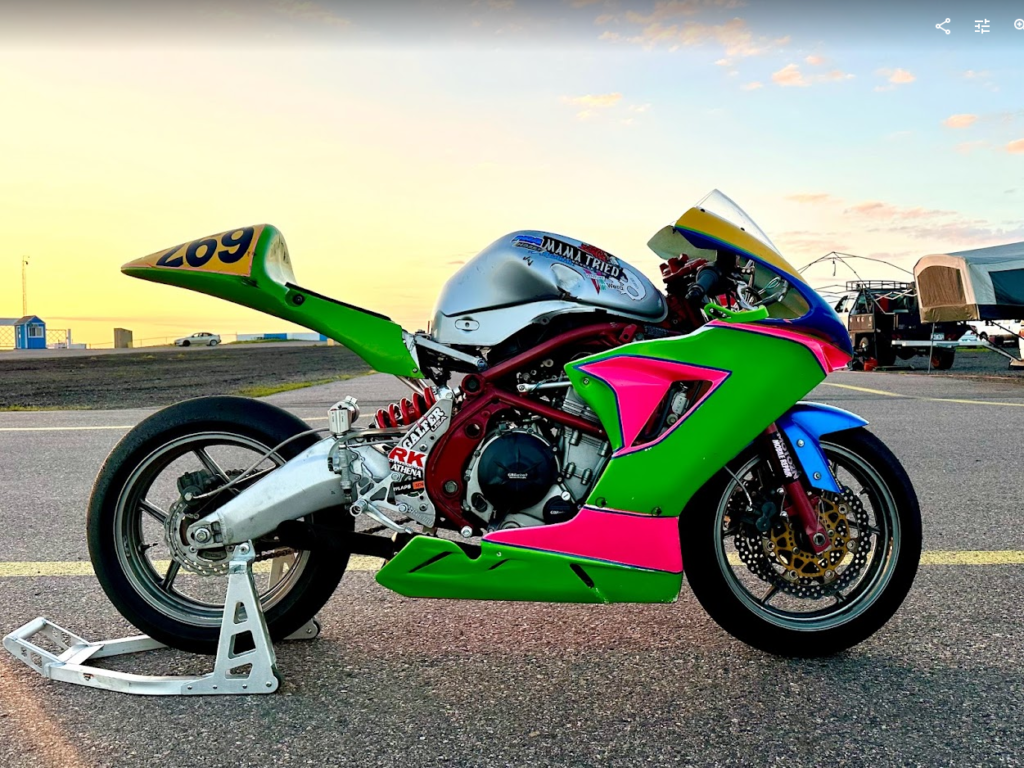
The stock muffler was heavy, and the lower fairing didn’t fit with it installed, so I replaced it with a Jardine GP1 slip-on I found used on eBay. In its third iteration, the bike had all of the above and an aluminum swingarm from a Kawasaki Versys, one-off fairing stays, and MV Agusta F3 fairings fitted. Every crash gave me a chance and excuse to keep improving the bike. The bike reached its final form, more or less how it sits today, sometime during the middle of the 2023 racing season.
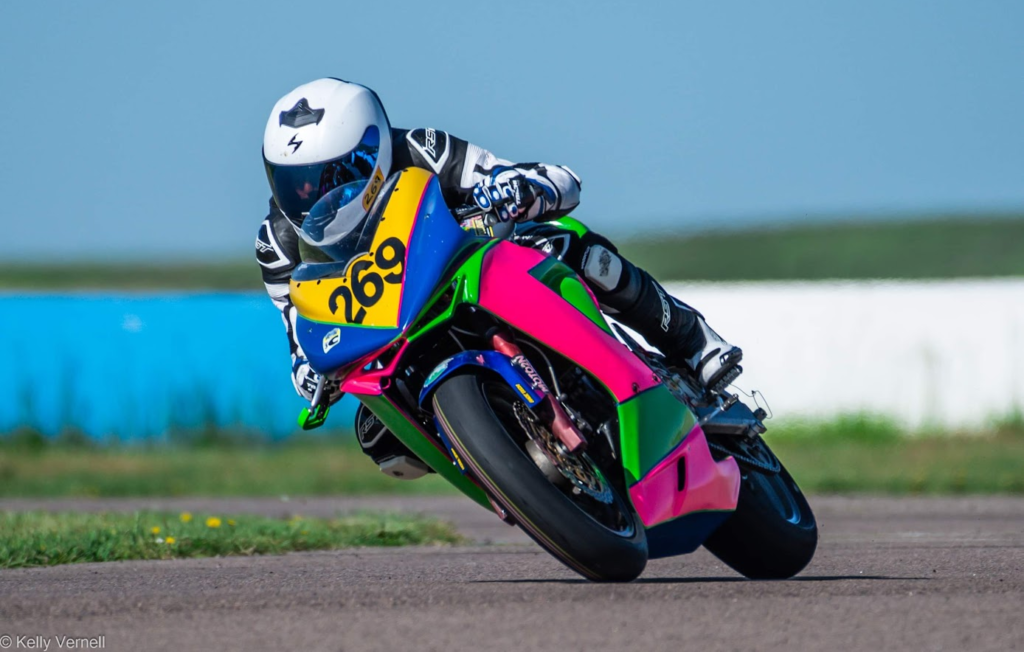
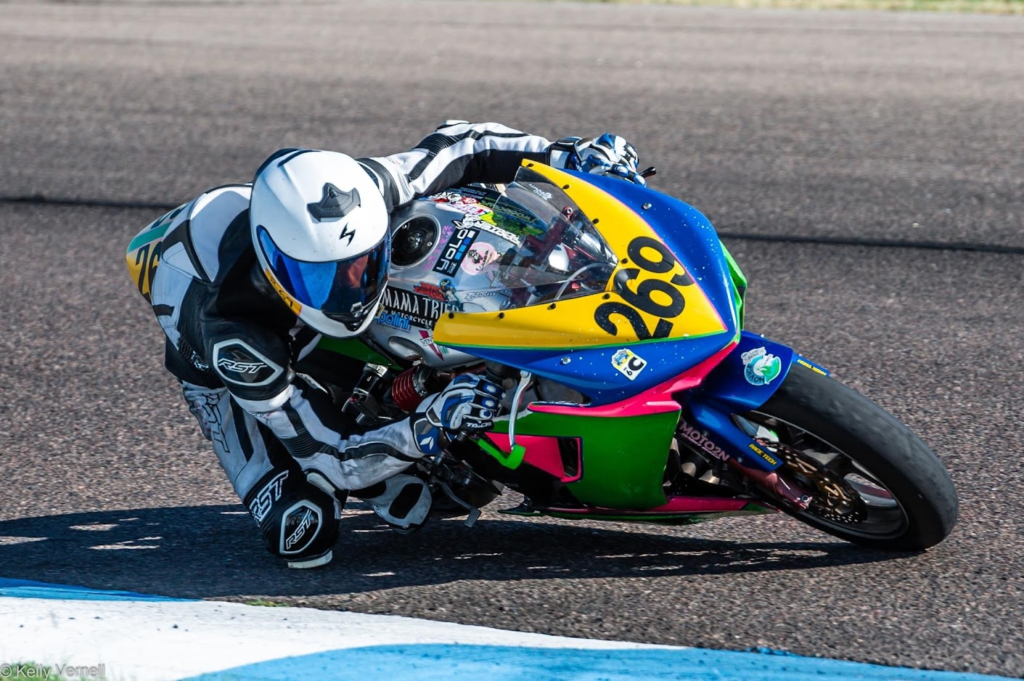
I ran a personal best of 2:02.3 at HPR full course on it that year. I took 3rd in the points in LW 2x and 4th in LWGP, getting bested only by Aprilia RS660 racers whose bikes made way more power than mine. If another racer was on something like an SV650 or a Ninja 400, I kicked their ass on my “homebuilt” lightweight 650 in 2023.
I crashed it again, for the third time, during the last lap of the last race at the last round of 2023, trying to chase down another novice who was on an Aprilia with way more power. The damage was minimal. I had the off-season to put the bike back together again. It didn’t take me very long.
I decided to race it again in 2024.
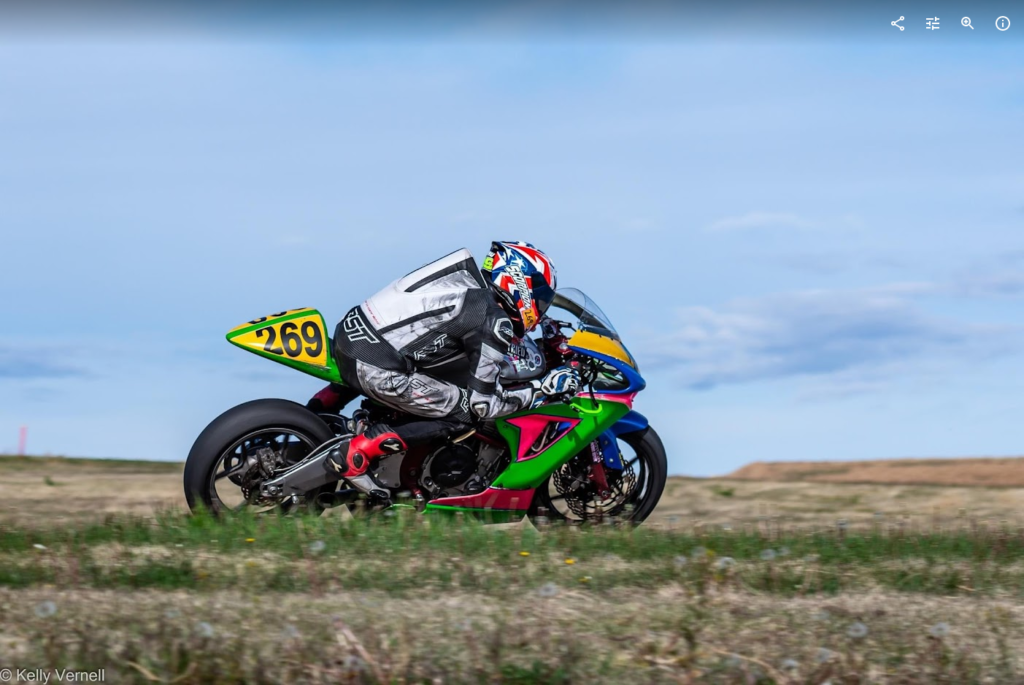
I crashed the bike yet again, for the fourth and final time, during the first lap of the first race of the 2024 season. This would be my biggest crash to date. I got a shit start and had to slow for traffic into turn 1. The wind was blowing hard enough to send an army of tumbleweeds rolling across the back straight after the start. I decided the best course of action was to motor straight through them, but some racers were weaving around unpredictably, trying to dodge the tumbleweeds, forcing other racers like myself to dodge them and their machines. It was pure chaos, like something out of an 80s arcade game.
Somehow I ended up in front of another racer who was riding a Kramer. I hate Kramers. I’d probably like them more if I could afford one. I think of them as modern production race bikes cosplaying as good, old-fashioned GP bikes. If someone has good taste and the money to campaign a Kramer, they would be on a 250cc, 2-stroke, real-deal GP machine. But people don’t have good taste. So we get shit like Kramers instead. I know I’m being an asshole here, and I know Kramers are less expensive to race than 250 GP bikes. Let me have my fun.
Anyway, I was desperate to stay in front of him. I could hear him closing in, that stupid sound a big, single-cylinder 4-stroke engine makes like an idling helicopter, reverberating through my earplugs, getting louder by the second. I pitched my bike into turn 13 going way too fast, lost the rear, tried to save it, thought I saved it, but the rear suspension rebounded hard after the tire found something to grip, and I was thrown over the bars in the opposite direction. I remember thinking this is bad as I went over. The bike tumbled. I tumbled. The wind that day may have had something to do with it.
I felt my body fold up and what felt like every piece of cartilage in it go crunch. I thought I’d broken every bone in my body. My body somehow found a stable position sliding on my hands, belly, and knees. My visor came off my helmet as I stood up. I bounced on one leg, then the other, checking for structure and pain. I had structure and no pain, so I picked up my visor and started walking off the track into the outfield, still bouncing from leg to leg just to make sure. I unzipped my suit and stuck my hands into the leg openings, checking for blood or bones sticking out or something else, I’m still not sure. I didn’t piss or shit myself. I was and still am fine but with a right hand I’d rather people didn’t squeeze so hard when they shake it, which is pretty good all things considered.
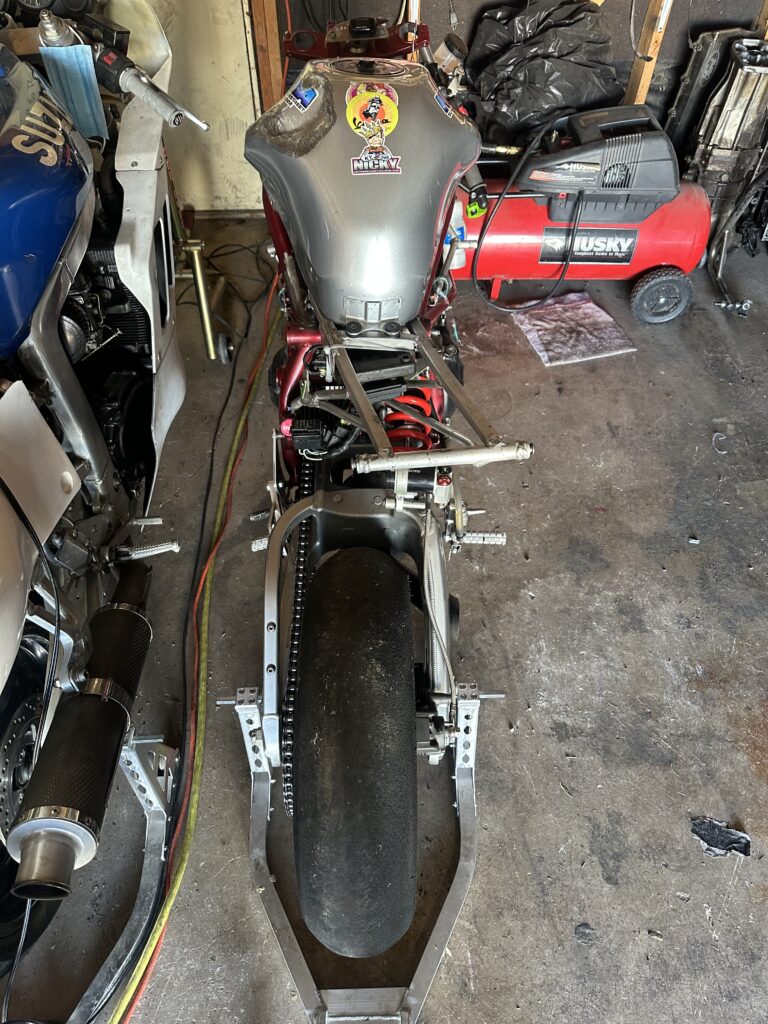
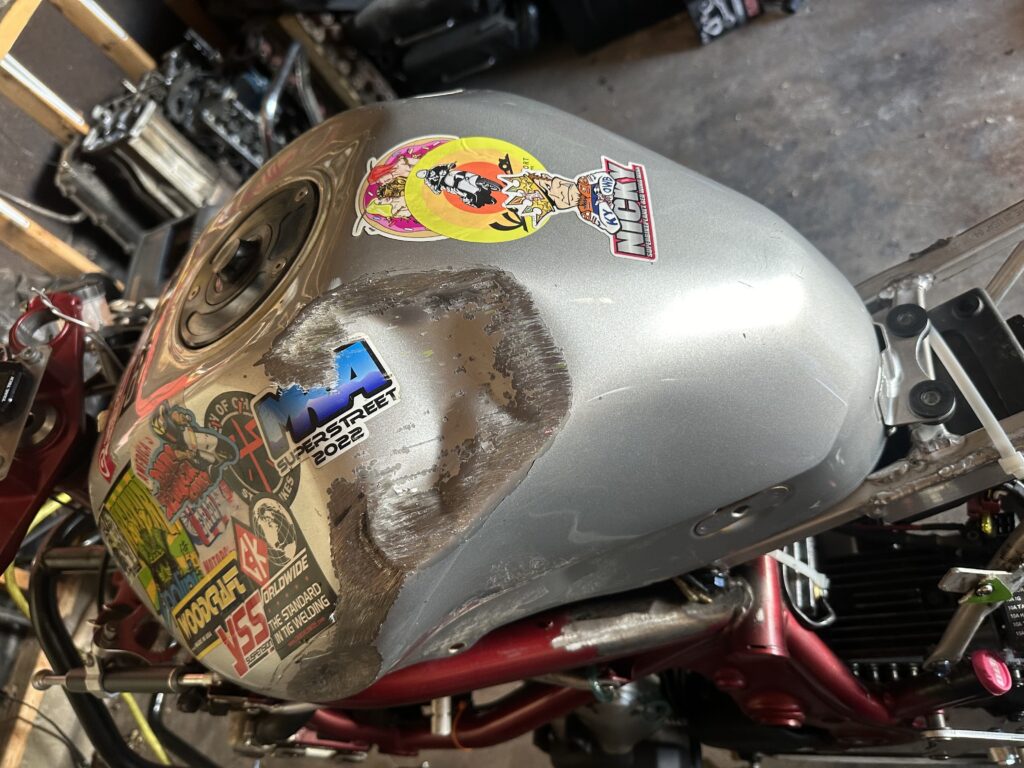
The bike did not fare as well. It went upside down. The main frame, swingarm, and engine survived. The forks and triples were bent. Both wheels and the front rotors ended up in the trash can. The tank hit the ground so hard, the plastic petcock sticking out from the fuel pump snapped where the fuel line attaches. The tank still holds fuel, but now it has two huge dents on the top left side. The windscreen shattered on impact. The front fairings are still usable, but the fastener holding the slip on to the mid-pipe somehow punched a hole through the bottom of the lower. The subframe I worked so hard to fabricate snapped in two places; the tail attached to it was also destroyed.
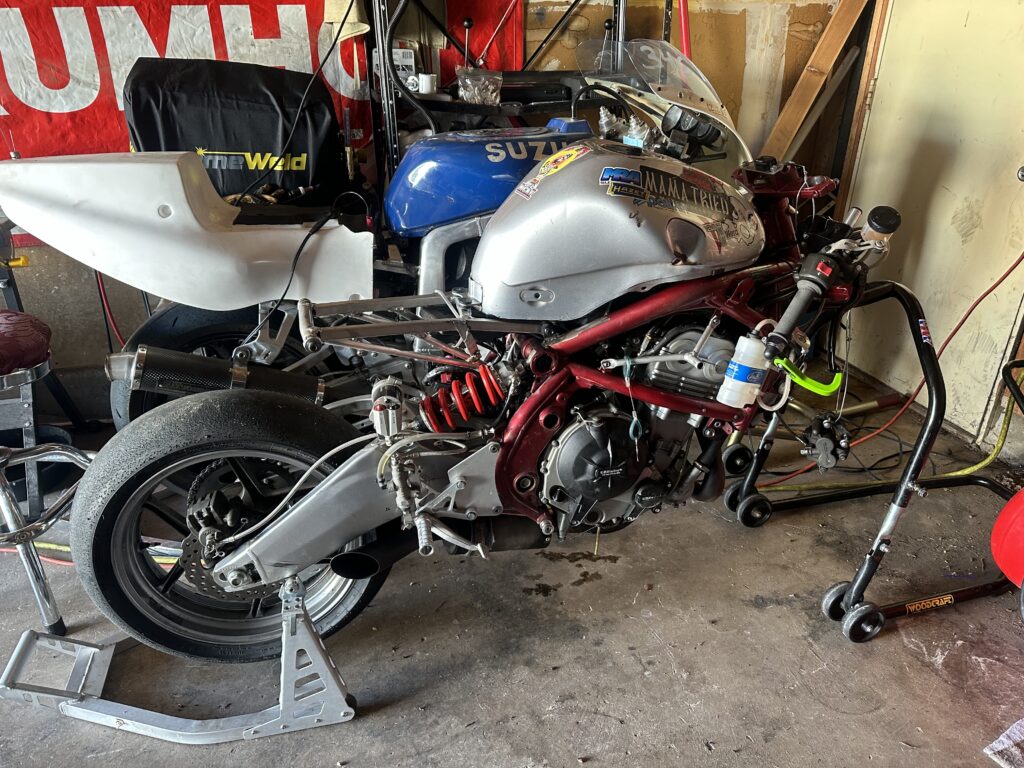
The bike was repairable. It would take a lot, and I didn’t have time to do everything before the next round. My racing season was shot. I did what any racer would do and bought another race bike, a newer, more powerful middleweight bike that was good to go, that I didn’t have to work on very much to start racing right away.
I accomplished everything I set out to do with my 2006 Ninja 650. I turned a $200 theft recovery into a rideable street bike, then a race bike. I transformed an ugly commuter bike into something that was all but unrecognizable, something vaguely exotic, a bike people ask “What even is that?” when they see it. I reduced its wet, curb weight by something close to 100 pounds. I built a wiring harness for it that still works to this day. I taught myself how to TIG weld aluminum by making one-off parts for it to fit other parts that were never designed for it. In close to 2 seasons of racing, it never experienced a single day-ending mechanical issue while on track. This despite being close to 20 years old, with something like 26,000 miles on its odometer when I started racing it.
The big question I had for myself was what was I going to do with it after my big crash at the start of 2024? Part it out? Nobody wants 2006 Ninja 650 parts. Fix it and sell it as a race bike? One time I tried adding up all the money I spent building it, and I stopped when I hit a certain number. I’d spent more than that, but it would maybe sell for half of the number I stopped at. It had a clean title in my name. I could turn it into a street bike again, either for myself or someone else. But nobody wants a street bike with no gauges, with the ergonomics of a vintage GP machine, one where the total mileage is “unknown”, that they don’t recognize because it’s nothing like anything else they’ve ever seen.
I built the bike I wanted to build. Some people say the best street bike is your old race bike. I decided to turn it back into a street bike for myself. That’s where you’re catching up with me now. My other street bike is an open-class, carbureted superbike from the 90s, and I care about it maybe too much. I’d hate for something stupid to happen to it. That and it’s finicky. Earlier this year I was thinking about buying another street bike, something like a modern but carbureted Triumph for not much money, to have a bike I wouldn’t have to care so much about to ride on the street.
I came to my senses. It would be less money and more fun to put a plate on my wild old race bike, to ride that on the street instead of some cookie-cutter Triumph Bonneville or whatever.
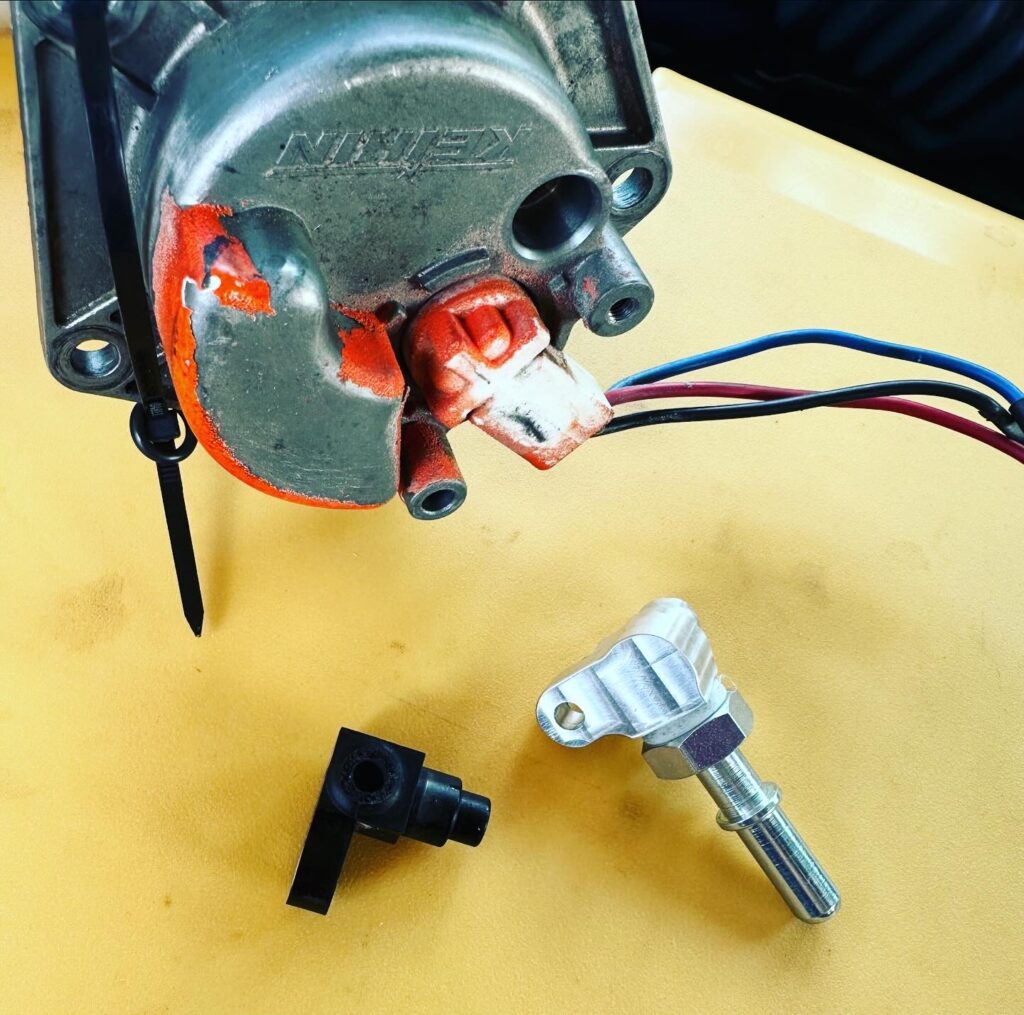
I replaced the 650’s bent fork stanchions, its bent triple clamp. I made another subframe and sourced another RS125 tail for it. Instead of buying another fuel pump assembly, I took the broken, plastic petcock parts to a local prototype machinist and had him replicate it out of aluminum. I made new, better fairing stays. I taught myself how to use a CAD program and had SendCutSend make me new rearset brackets based on my drawings. I installed its fancy Woodcraft rearsets on my ZX-7R, the 90s superbike I mentioned earlier, the bike they were designed for; half the reason I bought them was I knew I would eventually use them on that bike. I fit non-folding Woodcraft pegs into a set of OEM, 90s Kawasaki ZX-6/7 rearsets and reinstalled those back on the bike. I have no intention of fixing the dents in its fuel tank, battle scars I put there in an act of pure stupidity and bravery. They’re a reminder to keep my cool when I’m on a bike, on the track and on the street. I installed a pair of 0.90kg springs in the fork and turned the rebound and compression all the way down on the shock. I put the kickstand back on and trimmed the lower to make it fit. I’ve never been more excited about a kickstand.
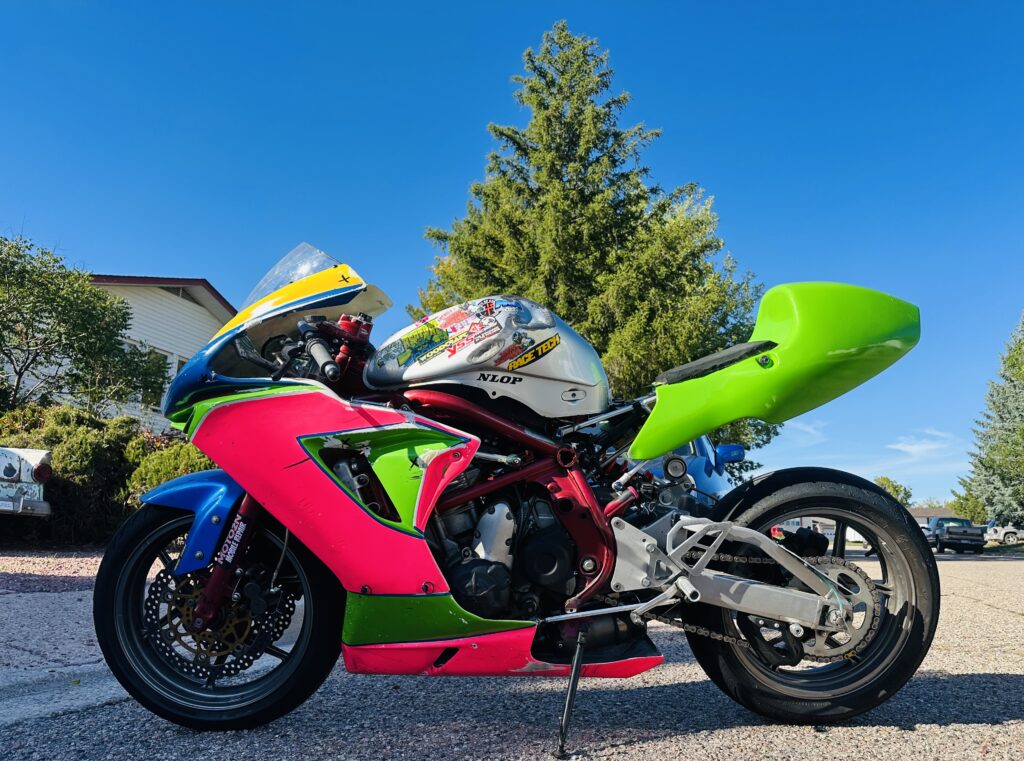
As I write this, there’s an OEM MV Agusta headlamp and a fancy bar-end mirror by Vortex on their way to me. I went by the DMV and re-registered it this morning.
All that’s left to make it fully street legal is to cut a diamond-shaped hole in the upper fairing, fabricate a bracket for the headlamp, wire up the lights, bolt the mirror onto the left handlebar, and install a horn.
Who even builds bikes like this these days? Who is making their own parts instead of buying them? Who is buying parts without being sure they’ll even fit? Who is taking parts from completely different makes and models and making them work? Who dumps $1600 into the suspension on a 20-year-old commuter bike and races it, only to turn it back into a street bike?
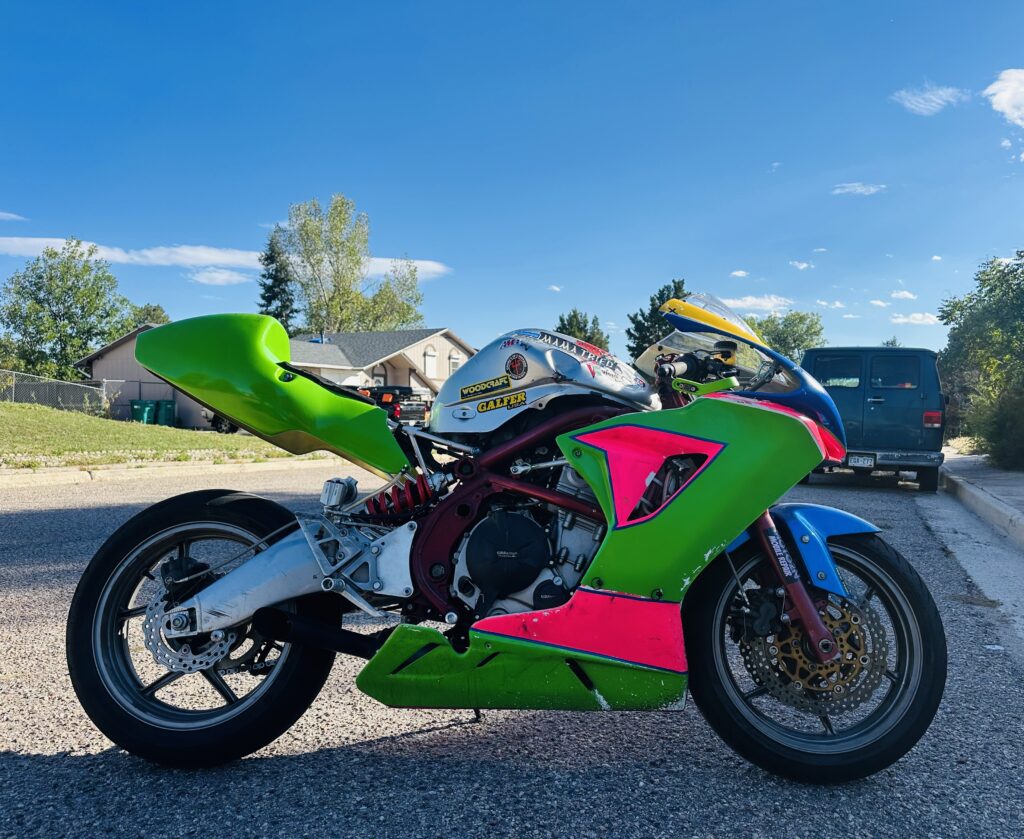
When “cafe racers” came back in the 00s, the bikes they were based on were 20-30 years old. Now a 2006 Ninja 650 is a 20-year-old bike. I think the “retro custom” thing is completely played out. I think many “builders” sacrifice performance for so-called aesthetics. They use mismatched parts and care too much about bling, trends, and instagram likes. Why else would someone fit inverted forks from a sportbike but retain the shitty, undersprung rear shock or shocks? Or, god forbid, fit knobby dual sport tires to a bike with 4-5” of suspension travel? In my opinion, if a bike doesn’t work well, if a so-called “build” doesn’t perform better than the factory bike, it’s a failure, and I don’t care how it looks at that point. It’s a hot girl (or guy) with a double-digit IQ. Who even wants that past the age of 25? If I wanted a bike with a classic look, there are more than enough factory-retro bikes available for reasonable money I don’t need to bother customizing. If I wanted to make a sculpture, there are better mediums to work with than motorcycles, like stone or wood or even paper mache.
The bike I put together here was forged in the furnace of actual competition. It knows what tire warmers are. It’s seen the red lights go out followed by full-throttle launches with the front wheel in the air and taken checkered flags for podium finishes. It has, dare I say, real club racing provenance. It’s been crashed and rebuilt and crashed again. It’s a tool for finding the limits of traction with a license plate bolted to its swingarm. It’s not a stupid, two-wheeled sculpture. If someone out there other than me thinks it looks cool, that’s icing on the cake.
Thanks for reading its story. My 2006 Ninja 650 is going to live out the rest of its days as my beater streetbike.